Spotting termite swarmers around wood stumps, mulch and firewood piles outside is not indicative of an infestation in your home; (What Do Termites Look Like and Termite Control) instead, discovering hollow tunnels and mud tubes within walls suggests infestation.
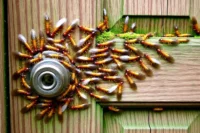
Viking Pest’s team of pest control professionals inspect framing cracks, unprotected brick wall entry points and any moist areas such as basements, bathrooms or crawl spaces for signs of termite activity.
Swarmers
Swarmers (sometimes referred to as alates or reproductive termites) are an elite caste within termite colonies that possess wings which allow them to embark on nuptial flights in search of mates and establish new colonies. While worker and soldier termites possess two sets of equal-sized wings which extend past their bodies, swarmers possess two equal sets of wings which extend beyond them as well. Swarmers typically leave their colonies from April-June on sunny days when conditions offer favorable survival conditions.
If you detect flying termites near your home, it is critical that you contact a pest control professional immediately. Any attempt at removal on your own could spread them further and lead to even worse infestation. Licensed professionals possess all of the tools and training needed to accurately identify species and scope of termite problems effectively.
While you wait for professional services to arrive, homeowners can do several things to lessen an emerging termite problem themselves. One option is using beneficial nematodes in your yard; these microscopic parasites target and kill termites by targeting their bloodstreams, eventually leading to their demise. Another strategy involves applying boric acid, commonly sold as borax powder, around your house; this substance dehydrates termites quickly before paralyzing their nerves resulting in their death within days.
Check for mud tubes on your property to detect subterranean termite nests and food sources. If you notice these tubes of mud and wood connecting the two, it’s likely you have an infestation. Drywood termites don’t create these tubes but travel directly through wood; to detect one, look out for signs such as wings on windowsills or open areas.
Workers (What Do Termites Look Like)
Worker termites are members of a colony who work to gather and transport food for all its members. They range in color from creamy white to tan or brown and measure less than half an inch long, living underground but traveling through wood/soil junctions using mud tubes which create passageways between your foundation and wood elements of your house causing significant structural damage.
Worker termites typically remain concealed inside their tunnels or mud tubes, yet if during routine home repairs you come across infested wood or notice any mud tubes it could indicate that there may be termite infestation requiring professional control services.
Workers can be identified from other termite species by their narrow protona (armored segment directly behind their heads). Soldiers resemble workers but are larger with powerful pincers to defend against pests to the colony.
Termite control typically relies on bait stations; however, liquid insecticides may also be necessary for severe infestations or large colonies. Homeowners can help prevent termite infestation by eliminating potential food sources, managing moisture issues, and watching wood piles for signs of activity.
Signs of termite infestation include any wood that’s warped, hollow or brittle in texture. Also keep an eye out for signs such as mud tubes and wings being left behind by termites – if this occurs contact an Orkin Pro for professional inspection to assess whether there’s an active termite problem and devise a personalized termite treatment plan that fits within your budget. Get started now – call now!
Larvae
Termite larvae are the future of any termite colony. Born from queen eggs and carefully cared for, these delicate, translucent-white creatures hatch from them and become key members of their colony as they mature into roles within it. Sometimes mistaken for maggots or booklice due to their off-white hue and worm-like form, termite larvae actually feature segmented bodies with straight antennae and six legs for support – distinguishable characteristics for termites over maggots or booklice!
Larvae feed on the cellulose found in wood, but are incapable of digesting it. They serve as natural “recyclers”, breaking down deadwood into something useful for new plant and organic matter growth; however, when larvae feed off structural wood found within homes or other personal properties on personal property, their consumption can result in widespread and expensive damage to those structures.
Seeking professional pest control services immediately upon discovering termite larvae on your property can be an early indicator of an infestation and should act quickly to address it. Treatments have proven successful at both stopping existing termites as well as stopping new ones from gaining a foothold, but for maximum efficiency they must be implemented early during an infestation.
Termite treatments range from soil applications and barriers that keep termites out to termite-proofing a home, such as cracking foundation walls or wooden support beams; regular inspection is important as well in case termites pose any threats. Search crawl spaces, basements, under porches and decks, or any damp location for signs of termites. Explore your local termite control options to select one best suited to you and your property – be sure to read reviews online, request references from previous providers and check BBB ratings before selecting one – doing your research is crucial for the success of termite removal treatment and can save costly problems down the line.
Mud Tubes
An infestation can have serious long-term repercussions for the foundation and structure of your home, leading to extensive structural damage. If you detect wings, wood shavings, piles of frass (faecal matter), mud tubes or winged swarmers near windows or foundation, seek professional pest control advice immediately so as to limit further damage and contact an experienced pest control company for treatment.
Mud tubes are tunnels constructed from soil, wood and termite saliva that help subterranean termites remain moist as they travel between underground food sources and above-ground food sources. These protective structures lock in moisture for subterranean termites while offering shelter from predators or dry air and predators and making accessing wood cellulose easier – found everywhere from walls to flooring, furniture and wood beams.
Exploratory, working, swarm and drop mud tubes are four types of termite tunnels: exploratory, working, swarm and drop. Working mud tubes are often heavily trafficked as they serve as pathways from termite colonies in soil or wood to food sources – typically 1/4-1 inch diameter tubes found along foundation walls, exterior walls, sills joists window frames porches etc.
Exploratory mud tubes resemble working tubes but extend from the soil into your home, being shorter and lighter in color with more fragile textures than their working counterparts. Exploratory tubes serve as indicators of potential infestation and may help guide you in finding their nest.
Swarm tubes are short tubes used by termite colonies during swarm season to link their colonies with food sources, and should always be destroyed as this would only reestablish them in hard-to-reach spots, making treatment more challenging.
Damage and Termite Inspection
When termites attack, they consume wood both inside and outside a structure, eventually weakening it and eventually leading to collapse. Each year, termite damage costs billions in property losses alone – so early detection and prompt treatment are essential if we hope to prevent additional repair bills in the future.
Examine your home or business for signs of termite infestation, such as mud tubes and shed wings. Winged termites are often seen flying out from their colonies during spring to mate with potential mates before quickly dropping their wings after mating; one indicator that could indicate such an infestation would be seeing piles of wings left around the room, especially near windows or door frames.
Mud shelter tubes may appear on either the exterior or interior walls of your home with a slab-on-grade foundation, particularly near its foundation, inner foundation wall, support piers under your house or plumbing pipes. Should this occur to you, have an inspection performed immediately by an accredited professional.
Termites use tubes to travel between the ground and wood they’re eating in search of cellulose found in plant cells. Their feeding will leave a distinctive pattern of holes and tunnels within it – usually hollow but slightly more crumbly than dry-rotted wood.
Wood that makes hollow or brittle noises when tapped is another telltale sign of termite infestation, as this indicates internal decay that requires further investigation and possible repair. Failing to treat early only makes matters worse – so seek the services of an experienced pest control provider for thorough inspection and effective treatments immediately.